



IL-3
Interleukin-3 (IL-3) functions primarily as a hematopoietic growth factor, promoting proliferation and differentiation of multipotent progenitor cells into myeloid lineages[1]. Mechanistically, IL-3 signals through the IL-3 receptor (IL-3R), activating JAK2/STAT5 and PI3K/AKT pathways, thereby regulating cell survival and expansion[1][2]. In disease models, IL-3 is implicated in allergic inflammation, asthma, and hematologic malignancies, where elevated IL-3 levels correlate with enhanced eosinophil and basophil activity[2][1]. Compared with related cytokines such as IL-5 and GM-CSF, IL-3 exhibits broader lineage specificity and induces distinct transcriptional programs in target cells[2][3]. Agonists of IL-3R have been used experimentally to expand hematopoietic stem cells ex vivo, whereas neutralizing antibodies and small molecule inhibitors targeting IL-3 or its receptor attenuate pathologic inflammation and leukemic proliferation[1][2]. Functionally, IL-3 modulation in preclinical studies demonstrates the capacity to influence immune cell composition, providing a controlled model for evaluating therapeutic interventions in allergic and myeloproliferative disorders[1][2].
References:
- [1]. Ballester S, et al. Editorial: IL-2/IL-2R axis modulation by mesenchymal stromal cells: interaction with immunosuppressive drugs? J Leukoc Biol. 2017 Mar;101(3):617-619. [Content Brief]
- [2]. Yoshida N, et al. Differential effect of phosphodiesterase inhibitors on IL-13 release from peripheral blood mononuclear cells. Clin Exp Immunol. 2001 Dec;126(3):384-9. [Content Brief]
- [3]. Wallimann A, et al. IL-32 as a potential biomarker and therapeutic target in skin inflammation. Front Immunol. 2023 Sep 1;14:1264236. [Content Brief]
-
IL-3 Related Products (8)
Related Products (8)

-
Recombinant Proteins (18)
-
Hydrocortisone hemisuccinate
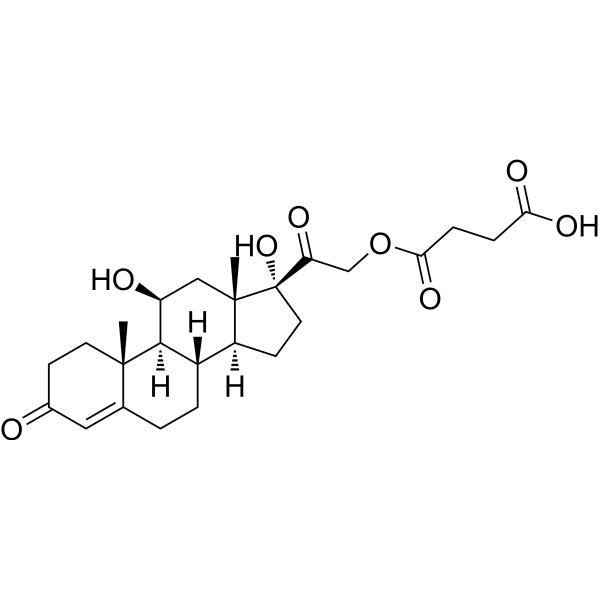 0 ImagesHydrocortisone hemisuccinate (Hydrocortisone 21-hemisuccinate), a glucocorticoid, is an orally active steroidal anti-inflammatory agent (SAID) with anti-inflammatory and immunomodulatory activities. Hydrocortisone hemisuccinate inhibits the bioactivity of IL-6 and IL-3 with IC50 values of 6.7 and 21.4 μM, respectively. Hydrocortisone hemisuccinate can be used in the study of ulcerative colitis (UC) and recurrent oral ulcers.
-
Etokimab
 0 ImagesSynonyms: Antibody ANB 020Etokimab (Antibody ANB 020) is a humanized monoclonal antibody that targets IL-33. Etokimab can be used for the research of atopic dermatitis.
-
Bexatamig
 0 ImagesCat. No.: HY-P990905CAS No.: 2871775-98-1Synonyms: SAR-443579Bexatamig (SAR-443579) is a trifunctional natural killer cell engager targeting IL-3R α/CD123, NKp46/NCR1/CD335 and Fc gamma RIIIA/CD16a. Bexatamig forms a cytolytic synapse between natural killer cells and CD123-positive tumor cells. By activating natural killer cells to induce tumor cell death, Bexatamig effectively reduces the burden of CD123-positive acute myeloid leukemia (AML) blasts. Bexatamig has been granted FDA Fast Track designation, and is primarily investigated for relapsed or refractory acute myeloid leukemia, B-cell acute lymphoblastic leukemia, and high-risk myelodysplastic syndromes.
-
Lyn peptide inhibitor
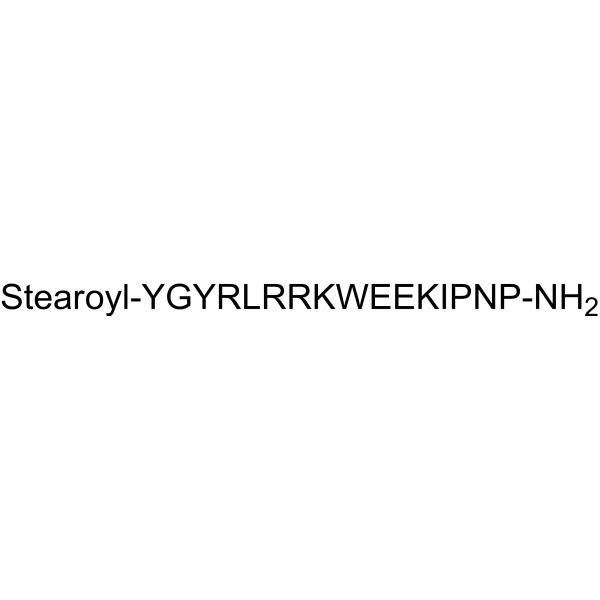 0 ImagesLyn peptide inhibitor (YGYRLRRKWEEKIPNP-NH2) is a potent, cell-permeable Lyn kinase inhibitor that inhibits Lyn-coupled signaling pathways associated with the IL-5 receptor while preserving the integrity of other signals. Lyn peptide inhibitor blocks the activation of Lyn and inhibits the binding of Lyn tyrosine kinase to the βc subunit of the IL-3/GM-CSF/IL-5 receptor. Lyn peptide inhibitor can be used in the research of eosinophilic diseases such as asthma and allergy.
-
Lixarkitug
 0 ImagesSynonyms: AZD9829 antibody; INT-020Lixarkitug (AZD9829 antibody; INT-020) is a humanized IgG1κ antibody targeting IL-3Ra/CD123. Lixarkitug can be conjugated with Samrotecan to form the intact ADC molecule lixarkitug samrotecan (AZD9829), which is used in studies of acute myeloid leukemia (AML). The isotype control corresponding to Lixarkitug is Human IgG1 kappa, Isotype Control (HY-P99001).
-
Anti-Mouse IL-3 Antibody (MP2-8F8)
 0 ImagesCat. No.: HY-P990214Anti-Mouse IL-3 Antibody (MP2-8F8) is an anti-mouse IL-3 IgG1 monoclonal antibody. Anti-Mouse IL-3 Antibody (MP2-8F8) relieves joint inflammation by reducing synovial leukocyte infiltration and cytokine levels. Anti-Mouse IL-3 Antibody (MP2-8F8) can reduce the accumulation of basophils. Anti-Mouse IL-3 Antibody (MP2-8F8) can be used for researches on inflammation or infection conditions such as arthritis and parasitic infections.
-
5-Androstenetriol
 0 Images5-Androstenetriol is a systemic radiation protector that can boost the host's immunity, leading to increased resistance to infections. 5-Androstenetriol can raise levels of IL-2, IL-3, and IFN, while countering the immunosuppressive effects of Hydrocortisone (HY-N0583).
-
Lyn peptide inhibitor TFA
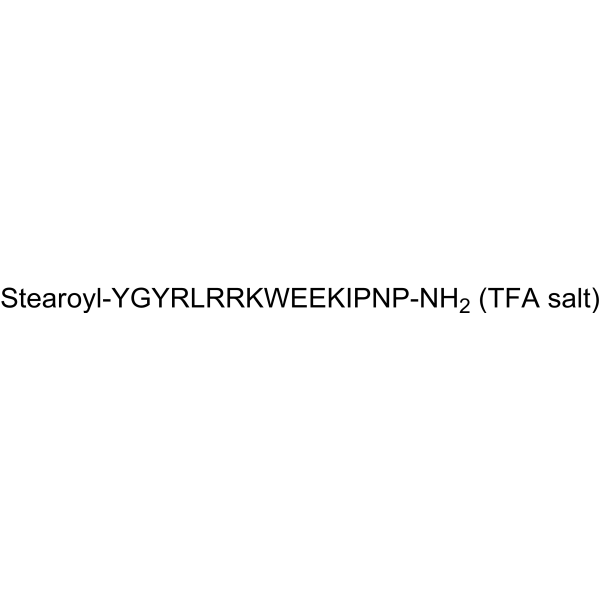 0 ImagesCat. No.: HY-P1111ALyn peptide inhibitor TFA is a potent and cell-permeable inhibitor of Lyn-coupled IL-5 receptor signaling pathway, while keeping other signals intact. Lyn peptide inhibitor TFA blocks Lyn activation and inhibits the binding of Lyn tyrosine kinase to βc subunit of IL-3/GM-CSF/IL-5 receptors. Lyn peptide inhibitor TFA can be used for study of asthma, allergic, and other eosinophilic disorders.




